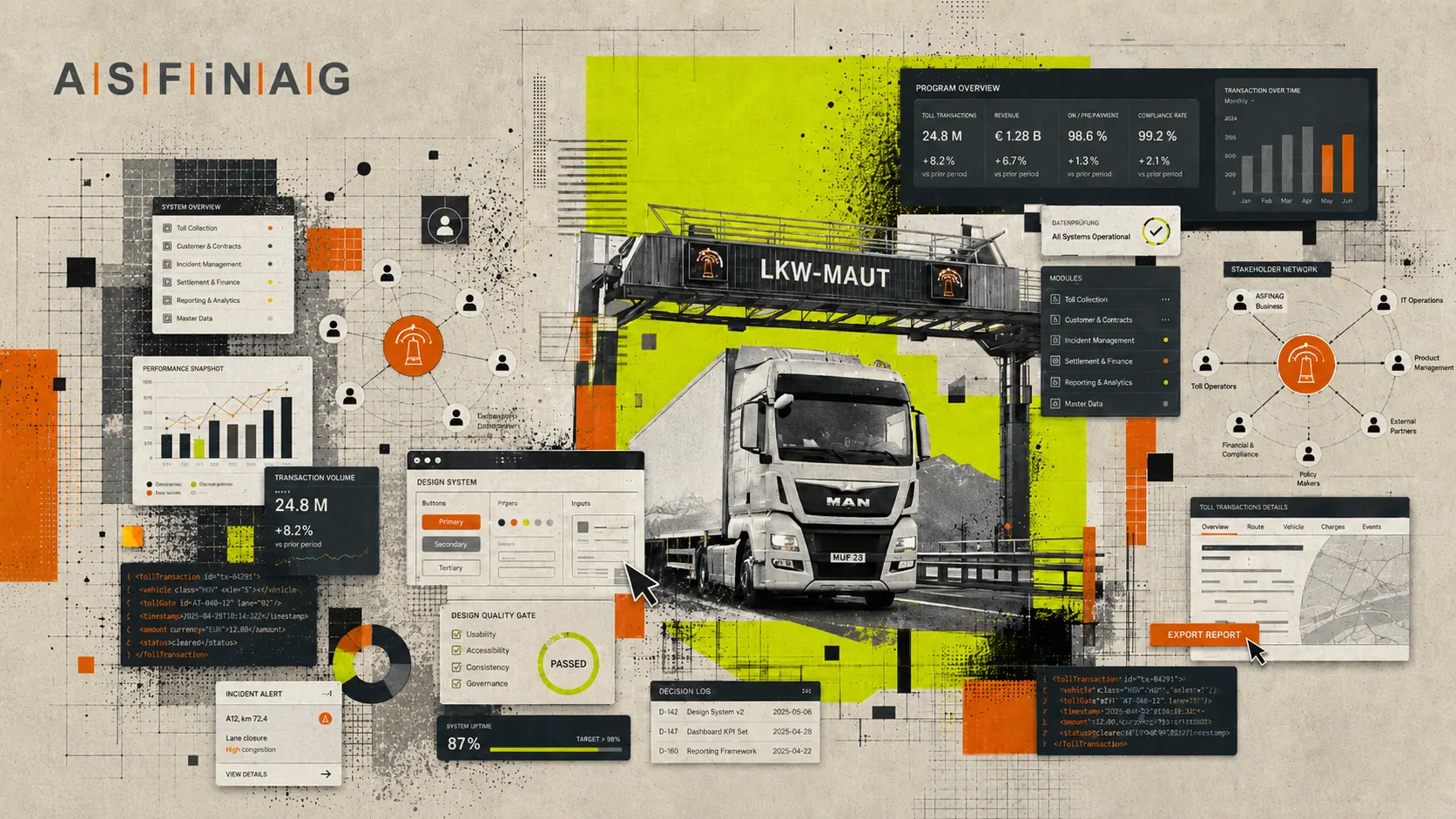
01 — The Context
A redesign in live operation has no comfort zone.
Around 80 operational specialist users work in an environment where mistakes are not merely annoying. At the same time a large program keeps moving. UX has to provide orientation here without slowing delivery down.
The context:40 to 60 participants in the program context, complex roles, and a platform that cannot simply be paused.
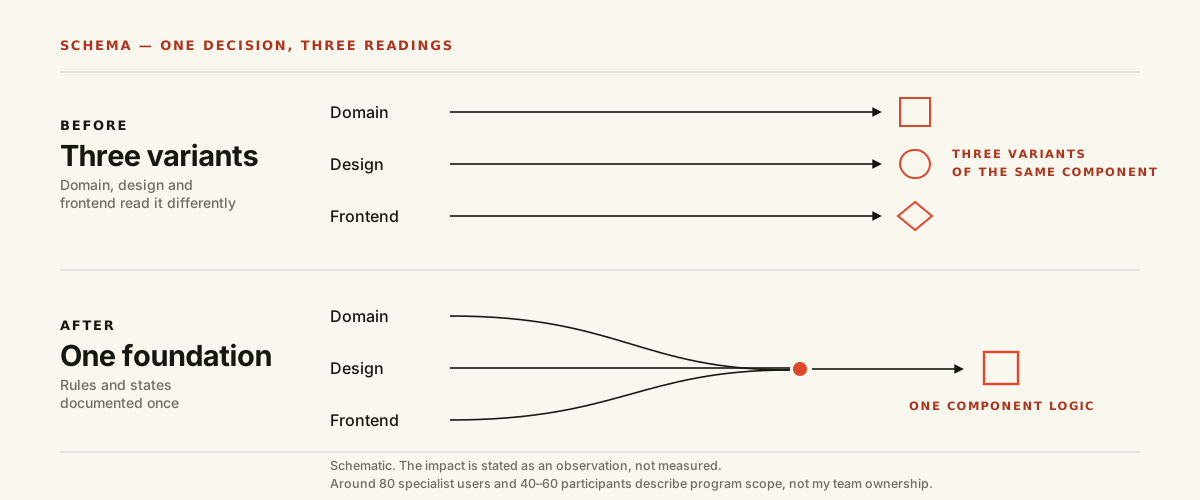
The real task:Not producing even more artifacts. Documenting decisions so that business, design, and frontend build the same thing.
02 — The Impact
Less room for interpretation. More shared direction.
The impact is deliberately phrased as an observation: design feedback became more focused, components were implemented more consistently, and open questions surfaced earlier. The figures above describe program scope, not personal team ownership.
Artifacts from a live infrastructure program are confidential. Public artifacts are limited by confidentiality; anonymized flows and component examples can be discussed in a direct conversation.
03 — The Approach
Not solving everything. But clarifying the right thing first.
Untangle the business logic
Make workflows, roles, and exceptions visible together. Only then is the jump into the interface worth it.
Frame the decisions
Show options together with their consequences, so opinions can turn into a decision that holds.
Make it fit delivery
Describe components, states, and rules so they do not have to be reinterpreted in the frontend.
“In critical delivery, clarity is not a design quality. It is risk management.”What working on infrastructure changes
04 — Key Learnings
What stayed from this work.
When contradictions in a flow become visible before they land in code, that saves more than any late polish.
A component name alone convinces nobody. The rule behind it is what makes it hold up day to day.