01 — The Context
A workshop is not yet a UX capability.
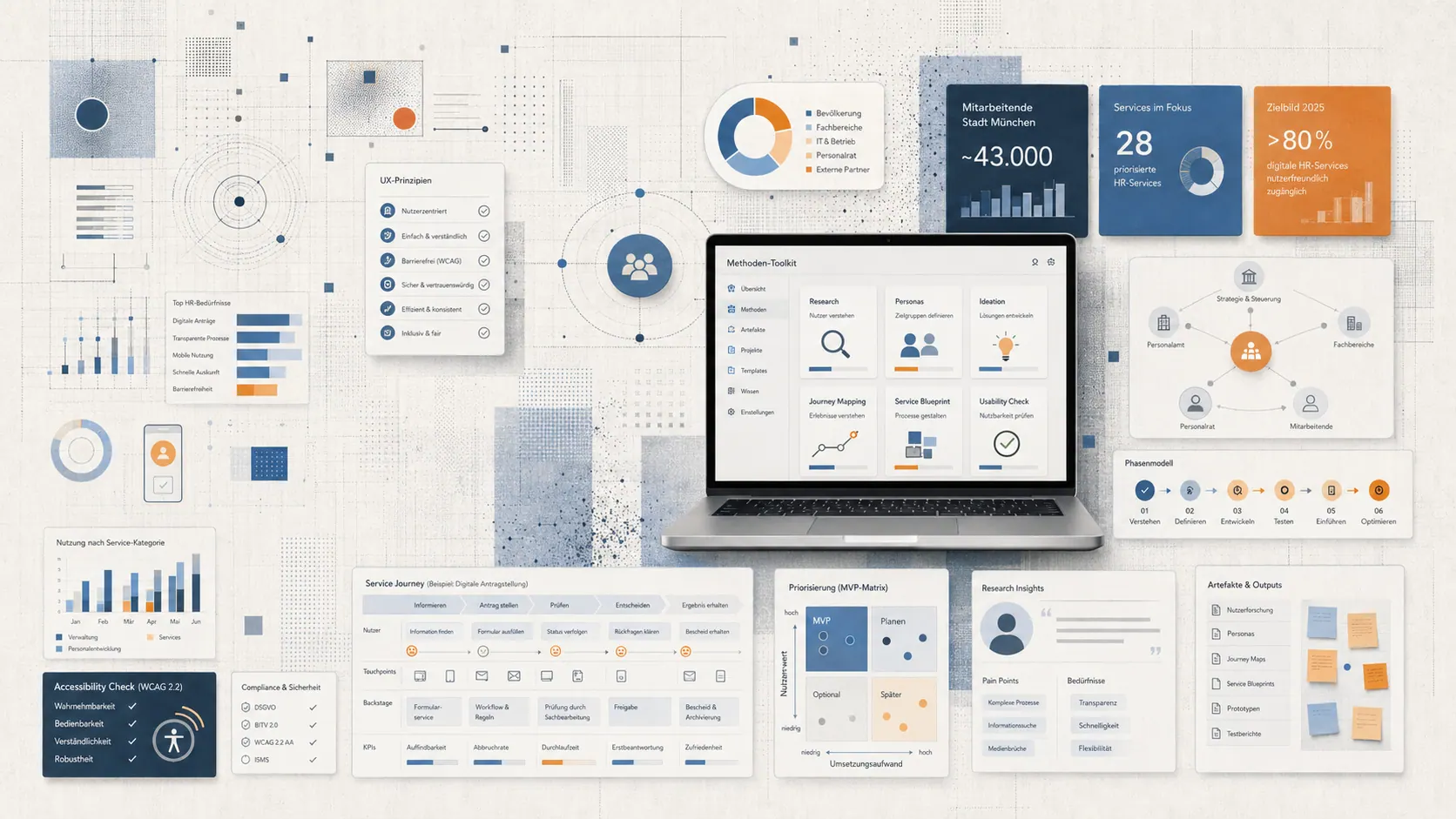
In an administration with 45,148 employees as of December 31, 2025, methods have to survive very different contexts. They have to be understandable, accessible, and usable without specialist knowledge.
The context:Public sector, many roles and processes, high demands on traceability and accessibility.
The real task:Not unloading knowledge. Building a set of methods and decision paths that can genuinely be used day to day.
02 — The Impact
Less dependency. Better-reasoned decisions.
Teams were able to reuse methods, justify decisions more transparently, and bring accessibility into product work earlier. The employee figure describes the organization, not the number of users reached.
Public insight is tightly limited in an administrative context. I am glad to walk through the method toolkit and individual decision paths anonymized in a direct conversation.
03 — The Approach
Methods have to be self-explanatory enough to work without us.
Simplify the language
Take methods out of UX jargon and explain them so business and product teams can work with them directly.
Test them on real cases
Do not perfect the toolkit in theory; sharpen it against live decisions.
Build accessibility in
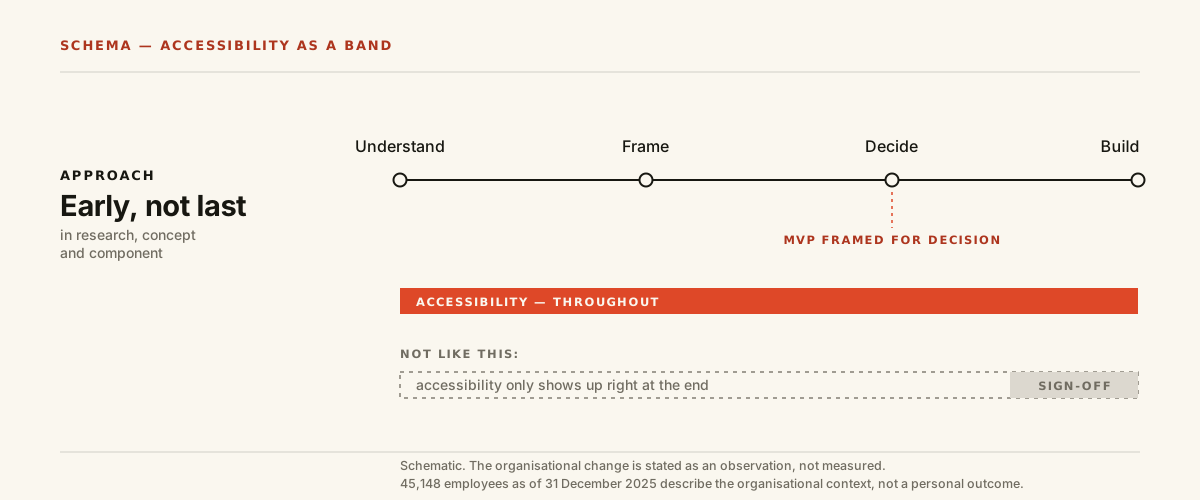
Treat accessibility not as a sign-off but as a question in research, concept, and component.
“Enablement has worked when the team takes the method and no longer has to call us about it.”My benchmark for successful enablement
04 — Key Learnings
What stayed from this work.
A clear method can carry complex decisions. It just has to show the right complexity.
The later it shows up, the more it feels like a constraint. Early on it becomes the better product model.